Forged in Fire | Blades of Fire Review
Smithing, Swinging and Slaying.
WACO, Texas (KWTX) -
*Code provided by publisher
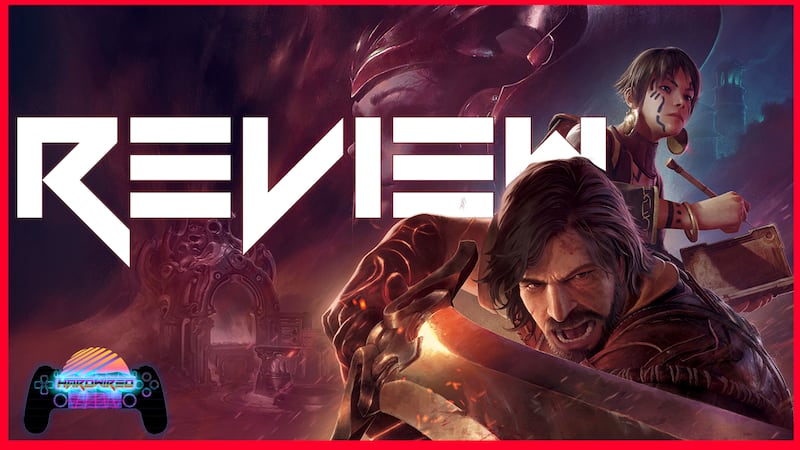
he scorching heat of a forge, the resonating vibration of steel shaping steel, the scent of hot metal being quenched in oil. All of these are things you would expect while visiting a blacksmith in some of your favorite RPGs, but what if you were responsible for making and maintaining all your own equipment? Well, look no farther than MercurySteam’s latest game, Blades of Fire. Nowadays there are so many games out there that it can be difficult to distinguish what is worth putting your time and money into. With so many different titles, it can be tempting to just pick up the newest AAA FPS or the latest sports title. Games with unique systems can be daunting to pick up when you don’t know whether it’s something you really want to invest yourself in. So, with that being said let’s jump right in and see if this title is a forged masterwork or a shattered blade waiting to happen.
On its surface Blades of Fire seems to be a generic fantasy hack and slash game and to be fair when the game first starts off, you’ll find it plays that way. With a single small sword in hand the game quickly thrusts you into conflict with the queen’s soldiers. At first glance the combat seems simple. The core basic mechanics are the same as most other action RPGs. Dodging, blocking and directional attacks make up the core of combat gameplay. Stamina management is a massive part of combat. Like many similar systems Blades of Fire uses a pretty straightforward stamina system. Small quick strikes use less stamina and can be chained quicker and with less recovery. Conversely heavy strikes drain large segments of stamina and are very slow but are typically stronger or wider reaching. This doesn’t stray from the typical ARPG to much with a few small exceptions. Each weapon has a different stamina pool and uses less or more depending on the heaviness of the swing. A few unique additions to this common system are the abilities to enter a blocking stance and take a breath to recover spent stamina and to directly control the direction of your attacks. By using the corresponding face button on a controller, you are able to directly control the direction your attack originates from. This allows you to not only make sure you avoid colliding with obstacles but also makes dealing with certain enemy types much easier. After using any stamina, you are able to block and use the Breath of the Defender, a technique that allows Aran to quickly recover spent stamina. Correctly time your block and you can parry as well. This makes you enter a flow state of sorts and gives unlimited stamina for a brief time. The last defensive option is dodging. Dodging allows you to avoid damage by getting out of the way, and with correct timing you get a quick slowdown that opens the enemy up momentarily. While straightforward seeming, as more enemy types get added and you face differing groups with different tactics you will quickly start to realize why this is no hack and slash mess but a complex system weaving stamina management along with the care of all the different weapons you will create throughout the course of the game.
Speaking of weapons, I’ll be the first to admit I typically do not enjoy the tedium of crafting in games. Whether it’s alchemy, magic, or weapons. It almost always seems to boil down to clunky menus that end with a new item or spell in your inventory. Do this over and over until you level your skill enough to move to the next menu and add another layer of menus for upgrades. Repeat ad Infinium. It gets boring fast but typically some of the best gear is behind these skills and so we follow along. What if a game took that lackluster system and made it not only interactive, but the fiery beating heart of the game itself? That is what Blades of Fire attempts to do here. The menus aren’t gone but are instead done in a way that truly gives the player agency over what they are creating. You choose one of seven weapon bases, then choose which variant you want to create. Let’s say you choose a spear. You will then get several options. You get some obvious options such as length of the shaft and spearhead type. Then you get material choices for each part as well. You also get some specialty options like edge shape. From weight to balance to edge shape, all of these culminate in creating unique weapons that you can tune to your playstyle specifically. This system gives you plenty of options to create, but the actual act of forging really shines. After all your selections are chosen, you will take a red-hot piece of steel to the anvil, and you actually hammer and shape the metal into what you need. The closer you get to the correct shape, the more times that weapon can be repaired.
Weapons aren’t the only thing well-crafted here. The story is a cohesive piece and avoids the pitfall of many new IPs in the form of large expositional lore dumps that tend to bog down the gameplay. If you enjoy digging into all the elucidative lore the game has to offer, look no farther than Atreus... I mean Adso. All joking aside, Adso is your one stop shop for all the information in the game. As you face various hordes of enemies, Adso will be there sketching and taking notes. The more enemies of a certain type you take down, the more that journal entry is filled out. These entries contain things such as little bits of lore on the enemy or even helpful tips on combating that enemy type. Honestly, these tips came in quite handy, especially when the various enemy types start to swarm together. While many games in the fantasy genre especially relegate the lore and tips to mostly useless bits and trivia, I found myself actively looking at every new entry update as the tips offered could sometimes drastically alter my approach to certain combat scenarios. It was honestly a breath of fresh air to have a noncombatant companion that didn’t feel like a burden or a hindrance. Also, if you get tired of his Adso’s quips you can send him back to camp with no repercussions, which I truly believe should be an option for most adventure games going forward.
The environmental design is quite beautiful and diverse with a fair bit of verticality and exploration mixed in. There are roughly eight explorable locations each with distinct visuals accompanied by what could only be described as epic tavern music. The game does a great job of giving each location a distinct feeling while not feeling disconnected from the rest of the world. The world map is on the medium to large size and there are some collectibles and such you may want to backtrack for at a later time. Luckily every anvil that you find not only acts as a save point and smithing point but also works at fast travel points. This allows you to traverse the map with ease and continue the adventure without worry as you explore the beautiful world the makers have forged.
With all the good this title has to offer, it does have some sticking points. While the combat feels good in 1v1 scenarios, as you start getting into 1vX conflicts you can tell the combat is not as suited to these situations. The directional attack system works well in most cases and allows versatility when approaching combat. However, it is also very easy to end up being slightly too close to obstacles and colliding with the environment. This combination of problems can lead to very easily becoming surrounded by smaller enemies without a way to use longer weapons to clear them. This is avoidable for the most part by avoiding engaging full groups at once, but that strategy tends to slow down exploration and story progress. This issue pales in comparison to my biggest issue, navigation. While this can be seen as a skill issue, I had a difficult time navigating the various maps. The maps are beautifully designed, and I am definitely guilty of trying to find most if not all secrets and collectables in games. Despite the clearly defined map, it can be difficult to tell which way you are going, and I found myself circling the same area several times trying to identify the correct path. Mostly I found the issue to be verticality as the levels are multitiered, but the map is a flat 2d image which leads to difficulty in telling where to enter and exit certain paths.
There is something that has happened in the last decade or so where studios are starting to realize that not every game has to be a copy paste with a few changes here or there of the latest AAA bombshell. Studios became so obsessed with the perfect 10 games that so many just fall to obscurity when not perfect and get left behind. As gamers there’s been a resurgence of realization that AA and indie games that are done very well can sometimes pop up out of nowhere and get not nearly as much recognition as they deserve. I believe Blades of Fire is one of those titles that was released out of nowhere and didn’t get enough marketing to really blow up. If you are a fan of fantasy and have a dream of making legendary weapons to beat down hordes of enemies to save the realm then grab your makers hammer and get to forging as I highly recommend this title even with some of its quirks. I give Blades of Fire an 7 out of 10. For Hardwired I’ve been Alex Richardson, Thanks for watching.

Copyright 2025 KWTX. All rights reserved.