Cursive in the Classroom: Essential skill or outdated relic for today’s students?
(InvestigateTV) — In January 2025, the U.S. National Archives sent out a unique call for help.
The request perfectly captured a growing cultural and educational divide. On social media, the agency asked:
“Is reading cursive your superpower?”
It needed volunteers to help transcribe historical documents, a task made difficult by the simple fact that a growing number of Americans can’t read or write in cursive.
The post highlights a question now at the center of a heated debate in classrooms and state legislatures across the country. In an age of keyboards and touchscreens, is teaching cursive an essential link to our past and a tool for cognitive development, or is it an outdated relic taking up precious time in an already crowded education curriculum?
Not Just an Academic Debate
A decade ago, only 14 states required cursive to be taught in public schools.
In 2025, a bit of a “cursive comeback” is underway, with more than two dozen states now mandating the skill. Lawmakers in California, New Hampshire, Kentucky, and Idaho are among the most recent to take action.
“I think some of it is this recognition that younger generations are so different because of this,” said Dr. Robert Wiley, a cognitive psychologist at UNC Greensboro who studies written language.
“It’s kind of shocking and really surprising to be like, how can they not be able to do that anymore?”
Helping with More than Just Penmanship
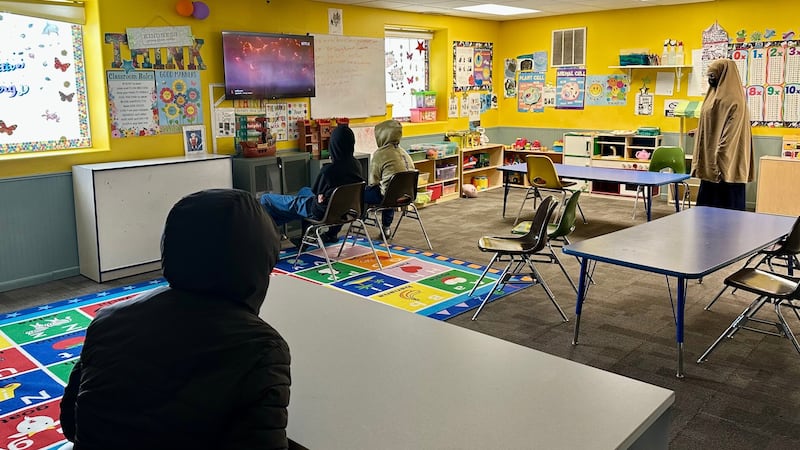
At Greenbriar East Elementary School in Fairfax County, Virginia, students spend about ten minutes a week learning cursive. The skill is required under Virginia’s standards of learning.
As eight-year-old Elina and classmates practice writing in cursive, their teacher stops by each desk and works one-on-one with students.
“It’s different because there’s like more steps to it,” Elina explained. “Cursive, there’s like squiggles. There’s not just like, straight lines, like print does. So it’s a bit harder.”
Their reading specialist says it’s a small part of the curriculum, but it’s still important.
“As we think of them getting older, things that they’re going to need cursive for are their signature, writing a check, signing important documents, anything like that,” said Kathryn Probst. “Also, there’s benefits that have shown the letter formation and kind of the flow of it can help with their spelling patterns.”
This view is echoed by longtime cursive advocates like Lauren Mooney Bear of the American Handwriting Analysis Foundation. She argues that the decline of cursive, which began around 2010 when most states adopted the Common Core standards that put more emphasis on keyboarding, has come at a cost. She believes teaching cursive to students can benefit reading, memory, comprehension, and cognitive development. She also feels it provides a crucial connection to the past.
“You know, going back to history, we couldn’t read the Declaration of Independence, we couldn’t read any of that without understanding cursive,” she said.
Is Cursive Writing Relevant to Today’s Students?
However, many educators on the front lines argue that the debate is not that simple. For them, it’s a pragmatic question of time and relevance.
Carter Taylor is a third-grade teacher in Kansas City, Missouri, where cursive is not currently required learning for students. The teachers’ union there has opposed a bill introduced by state lawmakers that would mandate cursive be taught by the end of fifth grade.
“Frankly, it won’t help them in the modern world,” Taylor stated. “When was the last time you were actively having to write something out in cursive?”
Her primary concern is the reality of an already overloaded school day.
“There are more minutes of curriculum than there are actual minutes in the classroom,” she explained. “Between writing, ELA, math, science, social studies, now adding cursive… Where am I supposed to put it?”
Adding another layer of complexity to the debate is the science of how we learn. Dr. Wiley’s research has found that the physical act of handwriting—whether in print or cursive—is a more effective tool for learning and memory than typing.
“These benefits of handwriting, it’s such a natural way to engage yourself in what you are learning,” he said. “You end up learning it a little more quickly, you might memorize it a little more strongly. More brain regions are engaged.”
But when comparing the benefits of writing in print to writing in cursive, he says there is not much distinction.
“In terms of this engagement of the handwriting, we don’t see any obvious differences between the two,” Dr. Wiley noted.
In other words, the research suggests that writing in print carries the same cognitive benefits as writing in cursive.
Not a One-Size-Fits-All Solution
There is, however, one area where cursive may have a unique advantage: for students with dyslexia.
Josh Clark, board chair for the International Dyslexia Association, explained that because all lowercase cursive letters start on the same bottom line, it can make them less likely to be reversed. Furthermore, he says the continuous flow of the script can aid in spelling.
“There’s also evidence that suggests that cursive helps with spelling because we’re doing one fluid motion when spelling that word versus writing a letter, stopping, writing a letter, stopping,” he said.
While Clark has seen many dyslexic students benefit, he cautions that it is not a one-size-fits-all solution and should be offered as a tool, not an inflexible mandate.
As the debate continues, the modern classroom reflects the ongoing transition.
At Greenbriar East Elementary, the cursive lesson is a hybrid of old and new. Students have pencils in hand, but their laptops are open as well, some watching an instructional video that includes on-screen animations to help guide their penmanship.
Is AI impacting your community? Find out more with InvestigateTV’s mAnIpulated: A Misinformation Nation
Copyright 2025 Gray Media Group, Inc. All rights reserved.