‘Ghost Students’: Why this growing scam is spooking students, educators
U.S. Dept. of Education: About $90 million in student aid money is missing
(InvestigateTV) — Scammers are cashing in on college aid more and more with the help of fake identities. The accounts associated with these “ghost students” allow the scammers to steal grants, scholarships, and taxpayer dollars.
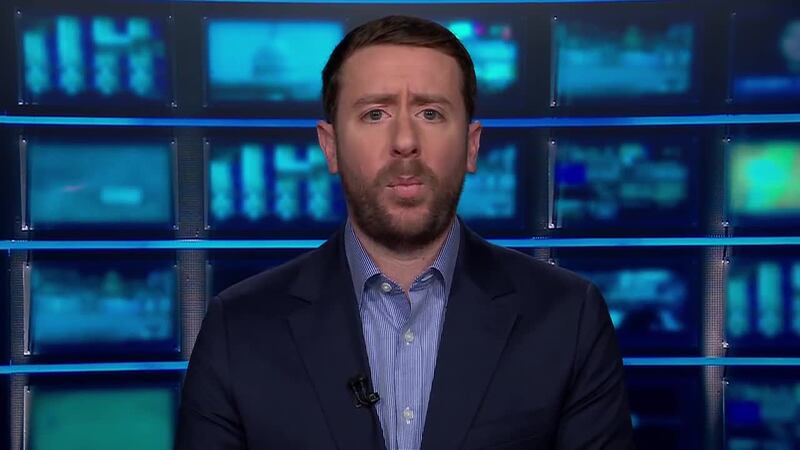
“We’re seeing a huge uptick in the student aid fraud area,” said Jason Williams, Assistant Inspector General for Investigations at the U.S. Department of Education.
As the school year approaches, Williams has issued warnings to students, faculty and parents to be on alert for ghost students.
“So, ghost students are students that don’t exist,” he explained.
He said fraudsters will complete an online application to a college or university using aliases or stolen identities. Then they enroll in classes once accepted.
In the most serious cases, the scammer behind the ghost student will apply for and receive thousands of dollars in financial aid.
“And so a lot of times, what we see, especially in online learning environments, you can have, sometimes, have 90% of a class and they’re not real students,” Williams shared. “And so, they’re turning in assignments, they’re responding to questions. But these are not real people and they’re other people. And there are other people orchestrating this behind the scenes to make money.”
Beyond financial damage, he said this type of fraud can directly impact legitimate students.
“Some people, as you’re trying to get your degree in whatever it is, and you’re trying to enroll in this course- and it’s a hard to get course—and you can only get it that one semester, unfortunately it’s full,” he said. “And that’s because somebody took your seat that’s not actually a real student.”
One case from the Office of Inspector General happened in Maryland.
A former university financial aid advisor was sentenced to four years in prison—followed by three years of supervised release- after pleading guilty to a decade-long fraud scheme.
“This individual, you know, over ten years, he had this huge scheme,” Williams said. “He waspretending to be over 60 people. And he was one of those ones where I said that people actually got, you know, degrees out of this, out of this scheme. Some were willing participants. Other ones were just stolen identities and the person happened be a federal employee on top of it.”
The judge also ordered him to pay back more than $5.6 million—the total outstanding balance on federal student loans he fraudulently took out for himself and others as part of the scheme.
Williams said if you suspect ghost students, report it to your school and the U.S. Department of Education’s Office of Inspector General.
“We’re looking at these things. A lot of times, it’s not usually a singular event. If one identity is being used or one ghost student exists, there are many,” he disclosed. “We tell the same thing to professors. And professors usually have a good indication that something is off about their class. If you see those things, report it to us and we’ll definitely take a look at it.”
Williams also urged people to report signs of other fraud, including missing school funds, strange enrollment patterns, payroll irregularities, or anything else that seems off.
Copyright 2025 Gray Media Group, Inc. All rights reserved.