$600 to $6,000: MRI cost skyrockets for woman with high cancer risk after move
Prices of MRIs, other medical tests may differ depending on the location, facility used
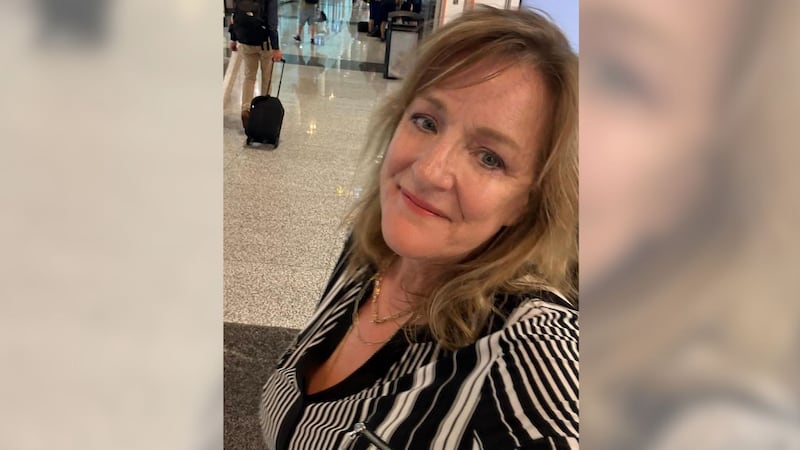
(InvestigateTV) — Like many women at high risk for cancer, Kelli Reardon relies on advanced MRI screening for early detection.
Not only did her mother die of breast cancer at age 48, but Reardon also has dense breast tissue, which makes it harder to detect a growth through a mammogram.
While most insurance companies fully cover the cost of a mammogram, they don’t when a woman needs an MRI.
Differing Costs, Same Procedures
Reardon needs an MRI twice per year.
The cost of an MRI can vary widely depending on where you live or where you have the procedure done, as Reardon learned.
When she lived in Alabama, Reardon went to an imaging center for her MRI. The procedure was billed to her insurance company for about $1,000. She was obligated to pay $650 of that.
Then she moved to North Carolina.
After her first MRI in the new location, she received a surprise upon opening the bill.
“I was actually shocked when I got it,” Reardon said. “I was calling family members and like, hey, is this normal? They were like yeah, it’s high, but it’s worth it.”
Suddenly, that same procedure now costs $12,000, leaving her owing thousands of dollars.
“Moving out here, I just assumed it would be the same, knowing hospitals may be a little bit more, just because it’s a different type of facility. But I didn’t expect quite the price change that I experienced with it,” Reardon said.
The price change, according to Reardon, was drastically different.
“Out here, it was $12,000. So, I was like, oh okay, no big deal. They made a mistake with billing. They accidentally added a zero,” Reardon said.
It wasn’t a mistake.
Reardon went from being billed around $650 out of pocket to more than $6,000.
Previous Investigation: Patients face unexpected, hefty bills for emergency ground ambulance rides
Pricing Changes Vary from facility to facility
Consumer medical experts say that is because instead of going to an imaging center, Reardon received her MRI in North Carolina at a hospital facility.
For both procedures, Reardon was using an in-network provider, received prior authorization and had the same insurance.
She expected the price to fluctuate, but not to the extreme that she received at her new location.
“I work in pharmacy. So, pharmacy bills real time. So when you come to the pharmacy and you pick up a prescription, that’s the price you pay. There’s no like back billing. You don’t get a bill that says, hey, now you owe an extra thousand dollars. With medical care, it’s all billed after the fact. So, it was probably six months later that I got this $6,000 bill because it’s all back billed,” Reardon said.
Congress is well aware of the issue and has proposed legislation that would require insurers to fully cover advanced screening for at-risk women.
About half of women between the ages of 40 and 74 have dense breasts, making them four to five times more likely to get breast cancer, according to Susan G. Komen, a nonprofit organization that advocates for breast cancer research, policies, survivors and other issues.
Patients often are shocked by the costs of care despite transparency requirements, said Kaye Pestaina, a vice president at KFF in Washington, DC, a nonprofit health policy research, polling and news organization. She directs its Program on Patient and Consumer Protections.
“Unlike any other product you would buy, where you know the price tag more often than not. Before a procedure, you just, you don’t know,” Pestaina said. “For a private insurance, each employer, each insurer has a negotiated rate with each provider. They have their own provider rate. And that’s not often very transparent to patients,” Pestaina said.
Pestaina added that where you receive your care can make a major difference.
“Most patients don’t know you’re often paying more to get that care at a hospital setting. because of what are called facility fees. I’m not sure that’s the case in this particular scenario. But often, a hospital is going to charge you an extra fee,” Pestaina said.
Reardon noted that where she lives there are not many options for an imaging center nearby with the nearest urban center far away
“You’re talking about driving to Raleigh, which is four, four and a half hours from here,” Reardon said.
InvestigateTV showed the pricing differences to Patricia Kelmar, senior director of health care campaigns at the U.S. Public Interest Research Group, or PIRG.
“There are significant differences. I mean $10,000, that is a lot of money. And it’s important also for our insurance companies, right? We don’t want our insurance companies paying five times the amount just because it was done in a hospital setting. You have to ask that question! You have to ask for the prices upfront,” Kelmar said.
One way of doing that, Kelmar added, is by looking at the center’s or facility’s website for a price estimator.
“See if your bill is even vaguely familiar. If you see if the bill is even close to what they’re telling you, they’re going to charge you. That’s a point of negotiation that you could have. It is the law that every hospital put on their website information about prices for the services that they offer. If you can’t find that, call them up and ask for it,” Kelmar said.
InvestigateTV reached out to Reardon’s hospital for comment:
ECU Health is deeply committed to its mission of improving the health and well-being of eastern North Carolina. We recognize the many complexities of health care pricing and are committed to supporting patients with their billing needs. In line with the Center for Medicare & Medicaid Services (CMS) hospital price transparency guidelines, ECU Health offers each hospital’s Chargemaster price list and a cost estimator tool for public access on our website. It is important to note that the prices reflected in these tools may not encompass all costs associated with a service and may differ from the actual cost.
While we cannot speak to a specific case, there are many factors that can impact pricing for services. Prices may differ depending on geographic cost variations, service setting, insurance and insurance network status, and more. In general, care rendered within a hospital may be subject to facility fees, which cover the costs of hospital-based resources, staff, and infrastructure, all of which support patient care. If insurance does not fully cover services, ECU Health offers zero percent interest payment plans to help manage out-of-pocket expenses.
We strongly encourage all patients who have questions about their bills or potential service costs to contact ECU Health’s billing office at 252-847-4472 for personalized guidance. Being informed about pricing tools and available financial assistance options is important to empower patients to make well-informed decisions about their health care. ECU Health remains dedicated to delivering high-quality care to eastern North Carolina.
Previous Investigation: Hospital mergers with doctors’ offices contribute to patients footing the bill
Pushing for transparency
There are moves in the works to try and make prices more transparent, specifically when it comes to receiving what is called an Advanced Explanation of Benefits or AEOB.
“I think most of us who are our consumers know that we get this thing called an EOB. It says this is not a bill from our insurer, and it tells us how much we have to pay out of pocket after we get the service the federal law requires. You get that notice before, but that hasn’t yet been implemented. So patients are still kind of on their own to figure out, the costs beforehand,” Pestaina said.
There is a bill proposed that would eliminate out-of-pocket expenses for people like Reardon. The federal “Find It Early Act” would provide health coverage with no cost sharing for additional breast screenings for people at greater risk for breast cancer.
The bill was introduced in April and has yet to have a hearing. But its goal is to provide women with financial relief.
“Yeah, that would be great. I mean, if this is something that are I mean, I guess it eventually comes down to our government decides is an important thing to help protect the women. I feel like a lot of times women’s health or women’s health in general kind of lags in care,” Reardon said.
Reardon is now on a payment plan, but she worries for other women, who are at high risk and who aren’t as fortunate.
“I just feel for people that aren’t as lucky as I am for. I mean, I do have a good job. I have a company that helps pay for health care. I have people that I can talk to, you know, to be somebody that just doesn’t know anything. Like, it just makes me really feel for people out there that just get the bill and then, you know, some people that could be the last straw for them,” Reardon said.
This story was produced in partnership with KFF Health News.
KFF Health News is a national newsroom that produces in-depth journalism about health issues and is one of the core operating programs at KFF — the independent source for health policy research, polling, and journalism.
Copyright 2025 Gray Media Group, Inc. All rights reserved.