‘We just want to go home’: San Saba, Texas residents remain in limbo months after devastating flooding
Rebuilding process a first for the county in more than 70 years
SAN SABA, Texas (KWTX) - “We want to go home.”
That’s the cry heard around San Saba as people who live there have surpassed two months of being displaced by devastating back-to-back floods in July.
People are frustrated they weren’t being given the green light to fix their homes, but the process to rebuild is a spiderweb of an issue, with a lot of rules and laws because of the floodplain.
Even when it is time to rebuild, the money needed will not be immediately available.
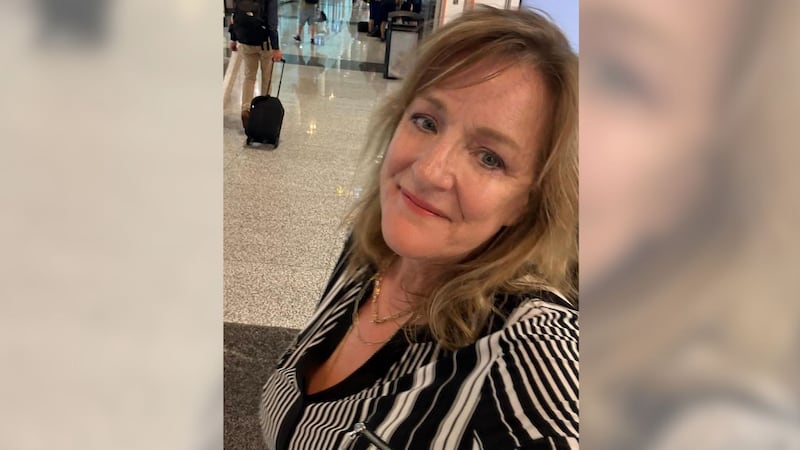
“To see this wall empty -- she had her posters and her drawings, and to now look at my wall that shows who my little girl is -- it’s empty. All of it had to come down,” said Anabell Cuevas.
The Central Texas mother struggled to hold back tears as she looked at what’s left of her home and grieves the decades worth of memories washed away in the flooding.
Cuevas and her family weren’t home when the flooding hit but they knew that the house they left would not be the same house they came home to.
“It was right above here, right up to the window. So just imagine what the house looked like. Coming out of my door to see how high the water would have been to me. That’s a crazy thought,” said Cuevas as she explained how the water would have come up to her neck.
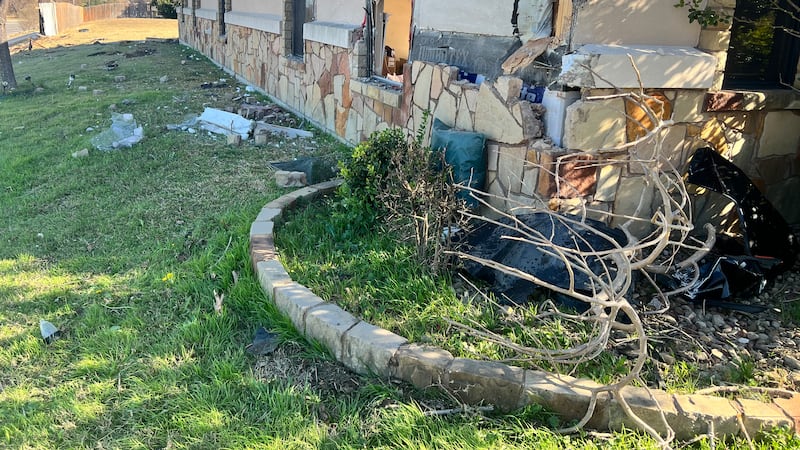
She is one of dozens whose homes have been stripped down to the studs.
Luis Jimenez lived at his girlfriend’s house. Her husband died years ago and every memory left of him was in that home. It has been like losing her husband twice.
“It’s her memories and she cries every time she comes down here,” Jimenez explains.
For other families, there was no time to mourn memories after the flooding. Some immediately got to work fixing their homes and hearts.
“My bathroom, as you can see, they had to take the walls and all the flooring out. I have a shower back there in the back,” Cuevas explains as she gives KWTX a tour of what’s left of her home.
“The plan was to, as soon as we could, clean our house out and get to work so we could start rebuilding and, sadly, since the 4th [of July] we haven’t even been able to come back and start rebuilding,” Cuevas said.
Just as quickly as they started working, they were forced to stop.
Yellow signs plastered on homes across town, the paper as bright as the message: a cease and desist to immediately halt rebuilding.
That was weeks ago. They’ve been waiting for the go ahead ever since. As frustrating as it is, the first part of the rebuilding process is completely out of control of local officials.
“We don’t know if it’s ten houses or 50 houses . We don’t have those numbers until we get those evaluations back,” said San Saba County Judge Jody Fauley.
Fauley said FEMA visited San Sanba on August 17 to evaluate the damage. That allowed them to create reports to determine how much property was damaged and how much it will cost to fix it.
“Based on the houses and the roads, I would guess $10-million in damage,” Fauley says.
Several homes were missed in the initial survey, which did delay getting those reports back. Those reports just hit Fauley’s desk right after Labor Day.
The reports will change a lot as people will know where their properties stand on FEMA’s criteria for what it will take to rebuild.
“Those homes have to comply with base flood elevation. Which could mean moving of the home or raising of the home,” Fauley says.
To further explain, if the cost to repair the house is more than 50 percent of the fair market value of the home, then that home has to be moved off the floodplain or be raised to whatever height standard FEMA sets.
If the cost of the damage is less than 50 percent of that value, those residents will get their floodplain applications and rebuilding permits approved and then they can get to work.
“We are waiving permit fees and will help vet who works on your home to make sure you aren’t getting scammed,” said San Saba City Manager Scott Edmonson.
Fortunately, those reports showed that only six homes fell above the 50 percent mark.
Before they had the numbers, Fauley said residents, at most, could fill out the floodplain application. Now that they have those numbers, the application is a crucial step for anyone who’s ready to put boots on the ground.
“There are things that should be going on that people can be doing. Everything stops until the flood application is approved,” Fauley said.
Currently, only 42 of 93 needed applications are in.
Why are these evaluations and applications necessary to the rebuilding process?
The answer takes us back to San Saba circa 1991 when the county entered the National Flood Insurance Program.
Upon joining the program, the county’s first and only floodplain map was drawn.
“When they came and did this study, they determined that anything between here and here is either 1200 or 1201. And this is sea level. This is the base flood elevation so the top of their bottom floor needs to be in between these two numbers,” said Marsha Hardy, the floodplain administrator for the county.
Those numbers are 34 years old and even though the surface of their city has changed, their map hasn’t.
“The only way they can do that is to do a new study. And obviously a new study would show that this is wrong. Because this is 1991,” Hardy explains. “You have to bring a lot of money to the table to be able to get them to do what they do.”
Hardy is responsible for collecting applications and following FEMA’s rules under this program.
It was explained to KWTX that the program allows them good flood insurance and disaster relief. Whether you need help from FEMA or not, you’re part of the program, therefore, if you’re on the floodplain you have to follow the agency’s rebuilding rules.
Then there are those who will need more financial assistance to rebuild. That is also out of the control of local officials.
“Right now, what has been raised is about $300,000,” Fauley said.
He said if there is money to be handed out from the government, they haven’t seen it. “We made a plea, as other counties did, that we know the state has some additional funds and reserves that we could use some assistance to help those people. I know that’s out there, but I don’t know if it will ever be available to us.”
Governor Abbott was in Waco recently and during a Q&A with local media outlets, KWTX asked about potential funding solutions for San Saba.
“The state was providing resources to the San Saba area from the day before the flooding began in that area and we continue to spend money as we speak,” Abbott told KWTX, “FEMA will provide the funding necessary for all their temporary living needs for months on end.”
KWTX has made multiple attempts to reach out to San Saba’s district representative, August Pfluger. We have not heard back.
Which brings us to the San Saba Long Term Recovery Group. A group made up of people in the community, for the community. And one of their missions is to pursue any available resource.
“The greatest need that I want to promote is, we’ve got volunteers and we’ve got a lot of materials but we need money. We need money because there are going to be some people that don’t qualify for insurance,” says local attorney, Marcus Wood.
Wood is the communications director for the group, bridging the gap between them and the community.
And they have others taking on different roles. Such as, organizing volunteers, or handling resource and case management which includes helping individual families transition to a new normal.
But even when it is time to put boots on the ground, the money to do it is nearly nonexistent.
“FEMA is not the solution. The federal government is not going to solve San Saba’s problems. We have to find our own solutions sometimes and so that’s what we are doing. Looking for opportunities here in San Saba to meet those needs that may not be being met by the current system in place,” Wood explained.
They know their lack of answers to certain questions is frustrating, but to be candid, this was a nearly 100-year flood.
“It’s the sheer quantity of the damage done by the floodwaters that at least in 70 years has never occurred in San Saba,” Fauley explains.
Nobody, from residents to local officials, have ever been in this position here.
“There will be some hard news that we will have to break to people, there will be some people who may not be able to go back to the home that they’re in. We don’t know all the answers to that yet but if that is the case, we want to be able to help them find somewhere else to live in San Saba. I’ve talked about maybe getting a group together and forming a subdivision that’s on higher ground,” Wood says.
In the process, they are being as transparent as they can be with the information they have. Which has included squashing some rumors in the small town rumor mill.
“There were some rumors going around that if people accepted FEMA that they would lose their Medicaid. We were able to lay those to rest. Another guy said that if they worked with one group, then they couldn’t accept help from the others and we assured everyone to go out and take advantage of every resource,” Fauley explains.
For the Cuevas family, San Saba soil is all they have ever known. Anabell raised her three kids in their home.
“Once this house is able to get repaired, that’s when we will finally feel like the wounds have healed,” she says.
And while they are hanging on to what memories they have left, they aren’t hanging up hope.
Copyright 2025 KWTX. All rights reserved.