‘This is my forever family’: Facebook post leads to life-saving kidney match
Harker Heights family honors daughter’s dying wish by finding local recipient for her organs through social media
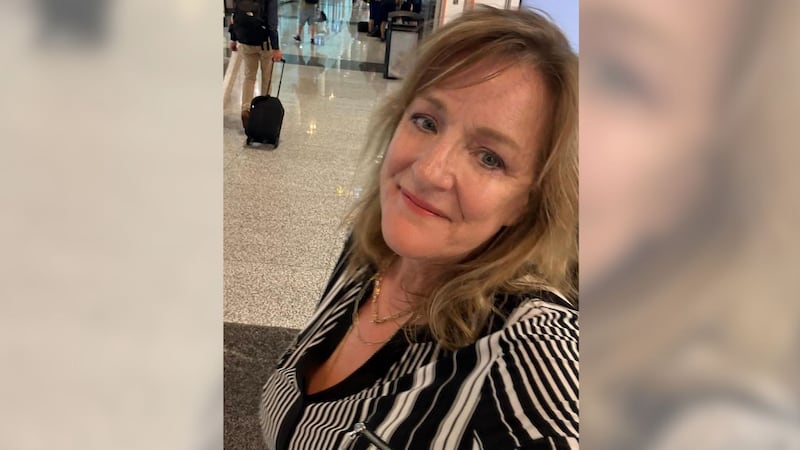
KILLEEN, Texas (KWTX) - The alarm was set before sunrise, just like every other dialysis day. At 3:53 in the morning on October 14, Shyreka Wallace routinely scrolled Facebook before her appointment.
Then she saw it — a post that would change everything.
“She posted on Facebook looking for someone who needed a new organ,” Wallace recalls.
For 25 years, Wallace has lived with lupus, a disease that causes her body to attack itself. The Killeen woman knows pain intimately — the kind that can make walking nearly impossible and cause weight fluctuations from steroids. It’s the constant sickness that comes with fighting an invisible enemy.
“It’s painful at times. Sometimes you can hardly walk. You stay sick a lot. Your weight goes up and down because of the steroids you’re on,” she said.
This wasn’t Wallace’s first dance with organ failure. In 2005, her kidneys gave out. She waited five grueling years for a match, five years of watching her health decline while hoping for a miracle that seemed increasingly unlikely. When that kidney finally came, it gave her nearly two decades of renewed life.
But last summer, the familiar signs returned.
“I started having trouble breathing. I started having trouble walking and having joint pain. I was put on a lot of medication. I gained a lot of weight because my body was retaining fluids. I was more swollen. My face was rounder,” Wallace said.
The woman who had already survived so much found herself facing an all-too-familiar battle.
“It was hard. And I accepted it. I had to to live,” she said, her voice breaking as tears welled in her eyes.
But acceptance couldn’t stop the inevitable. One day, even getting to a doctor’s appointment became impossible.
“My Uncle Ronnie took me to my appointment. And I could barely get in the building. And they rushed me to the ER, and I had immediate surgery,” Wallace said.
That surgery marked the beginning of a new routine: three-hour dialysis sessions, three times a week. Her blood needed cleaning and filtering, work her kidneys could no longer do. For just over a year, she waited on the transplant list, her life measured in appointments and treatments, hoping for another chance.
Meanwhile, 30 miles away in Harker Heights, another family was facing their own unimaginable tragedy.
Judith Lewis — “Judy” to those who loved her — had spent her 45 years navigating the world with difficulty. Born with cerebral palsy, blind, and struggling with mobility, Judy faced each day with determination her mother, Lauretta Lewis-Matthews, still marvels at.
“She tried her best. She knew she was limited,” Lewis-Matthews said.
Judy had already endured the recent loss of her father when October brought another tragedy. For the first time since her father’s death, Judy was home alone when fire erupted in the house. Her disabilities, which she had spent a lifetime learning to navigate, became insurmountable obstacles in those crucial moments.
“She made it to the door. But by the time she got there, she couldn’t get the door open,” said her sister, Tiffany Kruse.
“The roof was coming down on her,” Lewis-Matthews added, her voice carrying the weight of a mother’s worst nightmare.
First responders pulled Judy from the 90 percent destroyed home, her lungs seared by smoke inhalation. They resuscitated her with shock paddles and rushed her first to Seton Medical Center in Harker Heights, then to a San Antonio hospital better equipped for her critical condition.
But when the family arrived, doctors delivered devastating news.
“They tested her and said she was partially brain-dead and would never be off the machines. Even if she did recover, she’d be on machines in a nursing home the rest of her life. And we knew that wasn’t what she wanted,” Lewis-Matthews said.
In their darkest hour, Judy’s family made two decisions that would define how they honored her memory. They would let her go, and they would fulfill her dying wish.
Judy had watched her mother navigate kidney disease, dialysis, and the transplant process. She had seen firsthand the toll it takes on a person, on a family. Through it all, she had made her mother a promise.
“I was diagnosed with kidney disease and was on the transplant list and had to be on dialysis. I was very sick during that time period. She always said ‘Mom, I don’t want anyone to ever face that again,’” Lewis-Matthews recalled.
Judy wanted to give back to the Central Texas community that had supported her family through their struggles. But when the family asked the transplant team about directing organs to local recipients, they hit a wall.
“We asked the transplant team if we could choose a hospital for it to go to. They said they couldn’t due to HIPAA violations. And so I went on Facebook and advertised her organ,” Kruse said.
It was an unconventional solution to an impossible situation — using social media to honor a daughter’s final wish when the medical system couldn’t accommodate their request.
That post, shared in local Facebook groups across Central Texas, found its way to Wallace’s phone screen in the early morning hours of October 14. She didn’t hesitate.
“I was getting ready for dialysis on the 14th of October. It was 3:53 in the morning, and I saw a Facebook post,” Wallace said.
The response from her transplant team came quickly — and with news that seemed too good to be true.
“They said, ‘I’m sure you know, but we have a transplant for you. It’s going specifically to you.’ And I just started crying,” Wallace said.
After a year of waiting, of three-times-weekly dialysis appointments, of watching her body struggle, the call had finally come.
“I called my aunt and told my boyfriend. I called my little brother. Everyone wanted to take me. I said ‘No, I’m gonna drive myself. I’m leaving right now,’” Wallace said.
The surgery was successful. Wallace’s body accepted Judy’s kidney, and with it, a new lease on life.
“I lost weight. I’m happy. No more dialysis,” Wallace said.
But perhaps the most remarkable part of this story happened after the surgery, at Judy’s celebration of life. There, two families brought together by tragedy and hope met face to face for the first time.
“This is my forever family,” Wallace said, words that capture the profound bond formed between strangers who share hard times.
Lewis-Matthews knows Judy would appreciate her kidney helping Wallace get off dialysis.
“Judy would’ve been thrilled. I know that Judy’s been part of eight different lives, and we are just grateful that she can, out of a tragedy that we have suffered, that she can share with other people.”
Now, Wallace’s mornings look different. No more early alarms for dialysis appointments. No more three-hour sessions tethered to machines. Instead, she wakes up each day with a working kidney and the knowledge that somewhere, a young woman’s final wish continues to give life.
Copyright 2025 KWTX. All rights reserved.