The Pink Warriors: Two Central Texas women share their breast cancer journeys as awareness month ends
WACO, Texas (KWTX) - As Breast Cancer Awareness Month draws to a close, two local women are sharing their experiences with a disease that affects approximately 13% of women in the United States during their lifetime.
Tiffany Knight, a 34-year-old wife and mother of two, lived a normal life until four months ago when her world suddenly turned upside down.
“A year ago I did a mammogram and it was all clear, everything was good. That same day I found out I was pregnant and then 8 months into my pregnancy I was showering and I felt a lump in my armpit,” Knight recalled.
After giving birth, Knight went in for a mammogram and was diagnosed with stage three breast cancer.
“Even though I found the lump I felt fine. I was healthy, you know, I can do all the things and stuff so… it was really a shock,” she said.
Knight is now undergoing chemotherapy treatments every three weeks. Once those are completed, she will have a double mastectomy, radiation treatment, and then a hysterectomy.
“I wonder what it’s going to be like even after all the treatments and the surgeries and stuff like that, like how my body will feel… obviously I’m not gonna be the same,” Knight shared.
Early detection saves lives
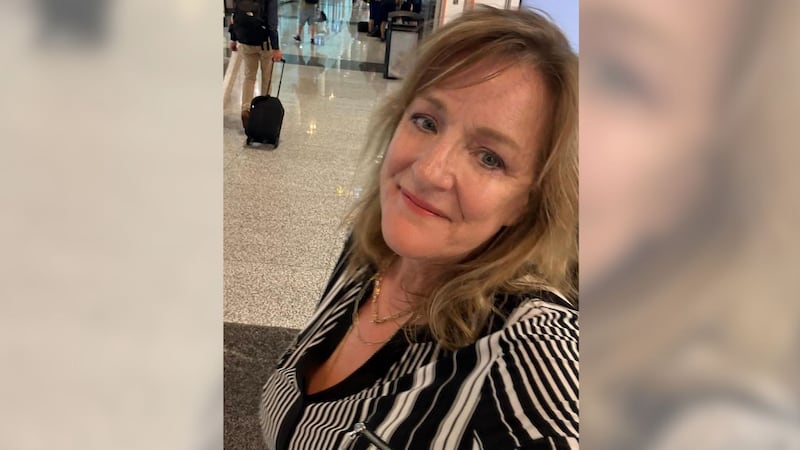
Allison Hulme represents another side of the breast cancer story. At just 35, she decided to ask her doctor about screening for breast cancer during a routine checkup.
“My grandmother had breast cancer whenever she was younger and so it was just on my radar,” Hulme said.
And so despite being completely healthy she scheduled a mammogram, never expecting that it would lead to her being diagnosed with stage one breast cancer.
“I was expecting to be in and out in like 20 minutes and now I’m calling my husband at work saying ‘oh my gosh we found something on the mammogram, we don’t know what it is’... you never expect it to be you, but it was,” she shared.
Both women were diagnosed in their 30s, when most women don’t even get their first mammogram until they’re 40.
“Standard of care if you’re of average or low risk is to get a mammogram at the age of 40 and every year after that,” said Michelle Wilson, manager of the Breast Center at Baylor Scott and White Hillcrest.
Rising cases in younger women
Wilson says they are seeing an increase in breast cancer cases among younger women, prompting recommendations for earlier screening.
“We do see an increase in it and we’re also seeing it in younger women, which is kind of scary cause nobody seems to know why at this point,” Wilson said.
According to the CDC, about 10% of new breast cancer cases in the United States occur in women younger than 45. This rate has increased approximately 1.1% every year since 2012.
However, advances in mammogram technology are also making early detection more effective than ever.
“With 3D mammography nowadays we can see through all layers of the breast and through different densities of the breast tissue, so now more than ever those little bitty calcifications, those small cancers we can see very clearly,” Wilson explained.
She adds that their goal with any diagnosis is early detection, when the cancer is still minimal in size. This is why mammograms are so important.
“We want to catch it when it’s the size of, you know, a couple of grains of salt and calcifications in the breast, cause that’s what a lot of people call a stage zero,” Wilson said.
Survival rates depend on early detection
The five-year survival rate for early stages of breast cancer is 99%, according to the American Cancer Society. That number drops to 91% when combining all types and stages of breast cancer.
Hulme was thankfully diagnosed early and is now 10 years cancer-free.
“The breast cancer that I had was stage one, but it was… they said a more aggressive type so I did the double mastectomy. But after the double mastectomy I was cured and it was all thanks to a mammogram at 35 years old,” Hulme shared.
But in Knight’s case she has a family history of breast cancer and a gene that makes her extremely high risk.
“My mother had breast cancer in her early 30s and my grandmother, her mother, passed in her early 40s from breast cancer. When I found out that I had breast cancer, I went ahead and had the genetics testing done and I was also BRCA1 positive,” Knight said.
Because she’s high risk Knight has been getting yearly mammograms since she was 30. Unfortunately she still developed breast cancer, which is why she now emphasizes the importance of regular self-examinations.
“If I hadn’t stayed on top of knowing my body then it probably could have been stage four,” Knight shared.
She remains hopeful about her treatment outcome and grateful for the support she has received. There will be a benefit for her, organized by the community, on February 27th.

“I didn’t realize how loved and supported I was… by so many people,” she said.
For those wanting to schedule a mammogram but unsure where to start or without insurance access, Hillcrest’s Breast Center provides information and resources.
Copyright 2025 KWTX. All rights reserved.