Finding Your Voice: Understanding Spasmodic Dysphonia
WACO, Texas (KWTX) - Imagine waking up one day, opening your mouth to speak, and hearing an unrecognizable voice. Words and sounds that once came easy to you are strained and labored. Or worse yet, they don’t come out at all. One of President Donald Trump’s cabinet nominees has a condition like this. You may have even heard him speak and asked yourself what’s wrong with his voice?
Robert F. Kennedy, Junior is Trump’s nominee for Secretary of the Department of Health and Human Services. His confirmation hearing is set for Wednesday, January 29. His voice has a strained and gravely quality. Kennedy has a condition known as spasmodic dysphonia, also referred to as laryngeal dystonia. Most health care institutions believe about 50,000 people in the U.S. suffer from this. But the Cleveland Clinic says it could be as high as 500,000. In this special report, Finding Your Voice, we found out for some people it can be a devastating diagnosis.
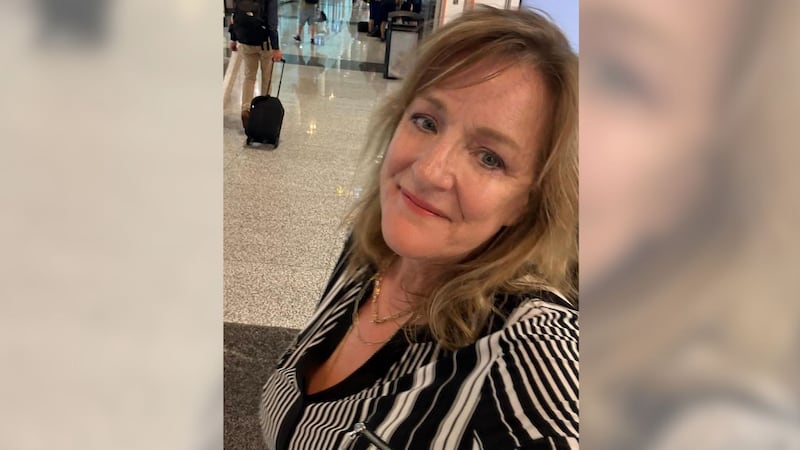
Rose Farmer’s life changed forever in the mid 1990’s when something started happening with her voice.
“I had trouble saying certain vowel sounds and I would try to say my phone number, and I would get stuck on the vowels like ‘8-oooohhh-3-4,’ and I couldn’t get the vowel sounds I couldn’t get it out,” she told us.
Rose was in her early forties at the time. Doctors sent her sent from specialist to specialist, but no one had any answers.
Rose explained, “my daughter was 7 at the time and I felt like I couldn’t holler at her if she ran into the street, I couldn’t read her books well, I couldn’t go out to eat. I mean speaking impacts every aspect of your life.”
Eventually she went to a speech therapist who used a camera to monitor her vocal cords as she spoke.
“Your vocal chords are supposed to do a gentle rhythm. Well mine were slamming shut and having spasms as I would try to speak,” she explained.
Finally after three years, Rose got her diagnosis, she has something called spasmodic dysphonia. Dr. Saul Frankford is with the Callier Center for Communication Disorders at UT Dallas. He specializes in speech motor control, and he’s spent years researching spasmodic dysphonia, also known as laryngeal dystonia.
Frankford told us, “what it is, is a neurological voice disorder that affects the muscles inside the voice box.”
He explained the two types. One is the condition Rose has.
Frankford said, “one is the adductor form where the spasms bring the vocal cords together. Sometimes they cause stoppages in the voice. Sometimes they cause a creaky or gravely sounding voice.”
And the abductor form has a completely different affect..
“There’s another kind where the opening of the larynx is affected, so you might get an extra breathy voice,” he said.
Doctors don’t know exactly what causes this, but they know it has a neurological origin. They also know it can be hereditary but not always, it shows up in middle age, forties and beyond, and it affects standard speech, but generally not whispering or even singing. Dr. Frankford also says voice quality can be worsened by stress or lack of sleep. And the potential problems it can cause are very clear, including increased risk of anxiety and depression, sometimes with devastating outcomes..
“There’s evidence of increased suicidality in people with laryengeal distonia,” Frankford told us.
That’s why he’s researching this condition. Most of his research looks at the way we use sensory signals, looking at senses from hearing to vision for any shared connection among patients with spasmodic dysphonia. And he found one, perception of touch.
“People had difficulty discriminating between different levels of pressure, or two finger spacing on the skin. I’m hoping to tie the physical processing to the actual speech disorder,” he explained.
And he’s learned some other interesting things.
Frankford said, “sometimes people with spasmodic dysphonia, they have a sensory trick, where they can put their fingers on a certain place on their face or neck, and the symptoms are relieved, and why this happens we don’t know.”
Other research suggests vibration on the neck or sustained loud noise can reduce symptoms too, all pieces of the puzzle. Dr. Frankford hopes this leads to sensory treatment, brain stimulation, or medication to target certain parts of the brain, to treat the condition and possibly even cure it. In the meantime there are ways to cope. Dr. Gregory Parks, a neurologist with Baylor Scott and White explained the current treatments for spasmodic dysphonia. He says while speech therapy may help a little, a drug used in cosmetic procedures does the most good.
“Typically the treatment for it would be a trial of botox therapy, and that can help people in a significant number of cases,” he explained.
Botox injected into or around the vocal cords to relax them can prevent spasms allowing for normal speech. But it’s not a cure.
Dr. Parks said, “it’s not a disease modifying therapy, in that you have to have continued botox injections every three or four months for continued relief.”
Rose Farmer started receiving these treatments in the 1990s.
“I feel super fortunate the shots work great for me,” she said.
But she remembers the feeling of isolation that no one understood what she was going through, and the judgment someone with this condition can experience.
“Just assumptions people make about you. They assume you’re nervous or your sick. Often they don’t hear what you’re saying because they’re sympathizing with you or they think she’s nuts, she has a mental problem, and it can be very diffIcult,” she explained.
So in 1999, Rose started a spasmodic dysphonia support group for Texas patients meeting twice a year and staying in communication to help one another the rest of the time. Right now there are about 40 members.
Rose said, “we talk about insurance and doctors and trying to help people deal with the health care system.”
She found out just how necessary support is as others deal will the ramifications of this condition, like losing their jobs or getting divorced due to an unsupportive partner. And to pay it forward, members of the group even participate in studies, to help others in the future.
“We’re always hoping for a miraculous cure, but even in small ways they are finding other treatments,” Rose told us.
But most importantly, she wants to help provide hope for anyone who develops this condition, so they know they can get through it and find their voice again.
Rose said, “there is help. There is treatment. There is a good voice that you can speak again.”
And if you encounter someone with a voice condition like this, Rose Farmer encourages you to ask questions.
She says she and others in her position would rather explain what’s really going on than have you assume they are ill, weak, or incapable.
Copyright 2025 KWTX. All rights reserved.