Perfecting the Blueprint - The Legend of Zelda: Tears of the Kingdom Review
Soaring to new heights never felt so good.
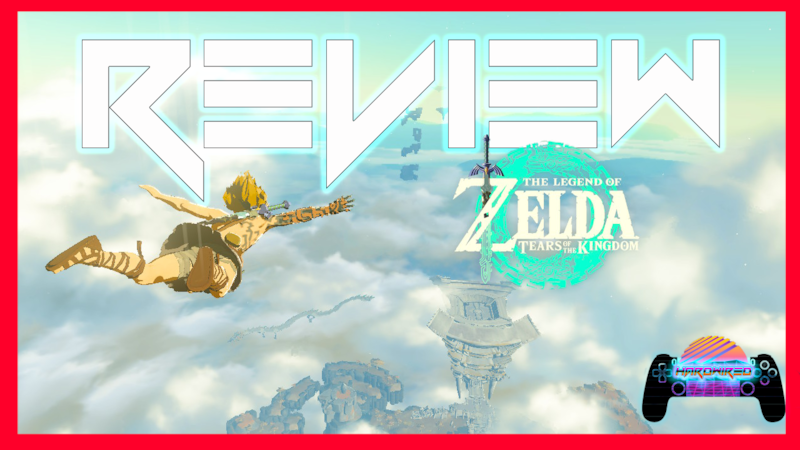
WACO, Texas (KWTX) - HARDWIRED
Written and Narrated by: Christian Sellers
Edited by: Kim Perez
Executive producer: Andrew Hamilton
___________________________________________________________________________________________________________________________________________________________________________
Nintendo’s The Legend of Zelda series is one of the most iconic in all of gaming history. Link and Zelda’s cyclical struggle to defeat Ganon and preserve peace in the kingdom of Hyrule has taken players on some of the greatest adventures this medium can offer. Known for the scale of its grand fantasy worlds, the franchise took an ambitious and successful leap into the open world action-adventure genre with the 2017 release of Breath of the Wild. Six years after reimagining the series, Tears of the Kingdom follows up Breath of the Wild with a journey even more colossal than the last. As a sequel, Tears of the Kingdom succeeds on all fronts. By emphasizing player creativity and freedom, deepening the interconnectivity of its systems, expanding upon its returning ideas, and introducing several more, Tears of the Kingdom surpasses its predecessor and launches the storied franchise to even greater heights.
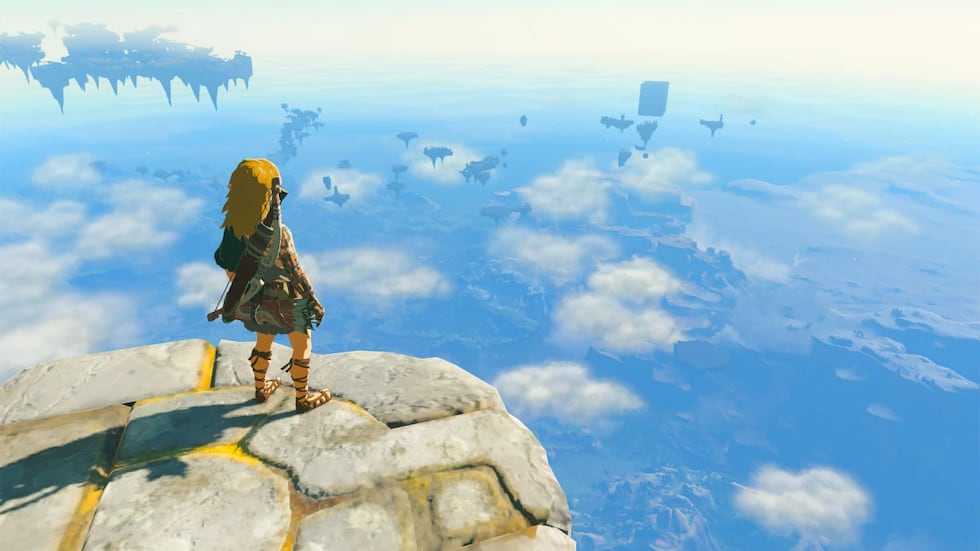
Much of Hyrule has been rebuilt after Link’s defeat of Calamity Ganon. With stability and peace restored, Zelda and Link begin seeking out and researching ruins of the ancient Zonai civilization. While exploring underneath Hyrule Castle, they awaken the mummified remains of a man sealed away long ago and plummet the kingdom into chaos. During this encounter, the Master Sword breaks, Link loses both his strength and the use of his sword arm, Zelda disappears into a chasm, Hyrule Castle rises into the sky, and a life-draining substance known as gloom spreads across the land. Link soon awakens with a mysterious new arm on a massive island floating high above Hyrule. When Link returns to the surface, he learns that Zelda is missing amid reports of several strange sightings. Additionally, many regions of the kingdom are experiencing adverse effects caused by this event, which has come to be called the Upheaval. Link then sets out on an adventure to destroy the source of the Upheaval, find Zelda, and restore peace to Hyrule. Without giving too much away, the main quest is excellent. Link must seek out and destroy the gloom’s source in each of Hyrule’s greater regions to reverse its harmful effects. Elemental temples replace the Divine Beast dungeons and feature unique puzzles solved with assistance from Link’s companions. Completing a temple leads to a powerful foe who causes each region’s crisis. These boss battles come with much more variety this time around, asking the player to approach them with a wider range of tactics. Most of the game’s narrative focuses on Link’s search for Zelda and a way to restore the damaged Master Sword. His investigation into Zelda’s disappearance leads to the discovery of several large geoglyphs, each holding a key to her whereabouts. All of these threads come together in an astounding finale, complete with amazing visuals, a truly epic, multi-phased final battle, and a satisfying epilogue to close this chapter in Hyrule’s history.
__________________________________________________________________________________________________________________________________________________________________________
The aesthetic qualities of the game see few changes from Breath of the Wild. The visuals show no drastic improvements, but the game still manages to look wonderful, and even downright breathtaking at times. Tears of the Kingdom does not attempt to capture the photorealism of other recent releases, instead capitalizing on its art direction to create beautiful and varied environments. The game’s painterly art style emphasizes softer forms and bright colors. This combined with a great lighting engine, and the geographic and cultural distinctions found throughout Hyrule, coalesces into an enjoyable visual language. As is expected of a title in The Legend of Zelda series, the music is fantastic. Nintendo continues to reimagine classic motifs from previous games in the series while adding compelling pieces unique to the Tears of the Kingdom experience. The many jingles accompanying new discoveries and treasures harmoniously work with the intense and grand themes of large scale battles to elevate every moment.
The gameplay in Tears of the Kingdom builds upon the already great core of its predecessor. Several components found in Breath of the Wild become apparent as Tears of the Kingdom hands over more control to the player. Much of the massive map remains familiar. Major villages, cities, and landmarks return with minor changes. The structure of the main quest recalls that of its predecessor as players will visit Breath of the Wild’s four biggest cities, reconnect with Link’s old companions, and eliminate the gloom in each region. Combat uses the same weapon types and largely relies on well-timed dodges or parries. Equipment still breaks over time, so it will be necessary to manage weapon condition as fights wear on. Korok seeds return as the means by which Link will increase the size of his inventory and he will regain his lost strength by navigating Shrines of Light.
Breath of the Wild’s foundational ideas make up the backbone of Tears of the Kingdom, but the game quickly reveals its many new tricks. Although there is initially a strong sense of familiarity, Tears of the Kingdom introduces so many new mechanics and locations that players will be uncovering secrets dozens of hours into their experiences. The most noticeable additions to the game are the chasms leading down to the Depths and falling rocks leading up to the sky islands. Both are a result of the Upheaval, and both have unbelievable amounts of quality content. To be completely clear, the Hyrule of Tears of the Kingdom is massive. The map is split into three different zones: Sky, Surface, and the Depths. There are many individual islands and island chains dotting the sky but the Depths fill out another full map on its own. The Depths are accessible by diving into chasms opened up in the ground. This area initially is pitch black, but Link can find sources of light during exploration. Creatures infested with gloom roam the Depths, and any interaction with gloom or hit from a gloom infested enemy will temporarily reduce Link’s maximum number of hearts. Hearts can be restored by illuminating new sections of the Depths, eating certain kinds of food, or by returning to the surface, but these factors lead to tense explorations as you search for treasure and safe spots in the darkness. Sky islands offer a wide range of problems and puzzles to solve, encouraging players to experiment with new traversal options and powers in their efforts to conquer the skies.
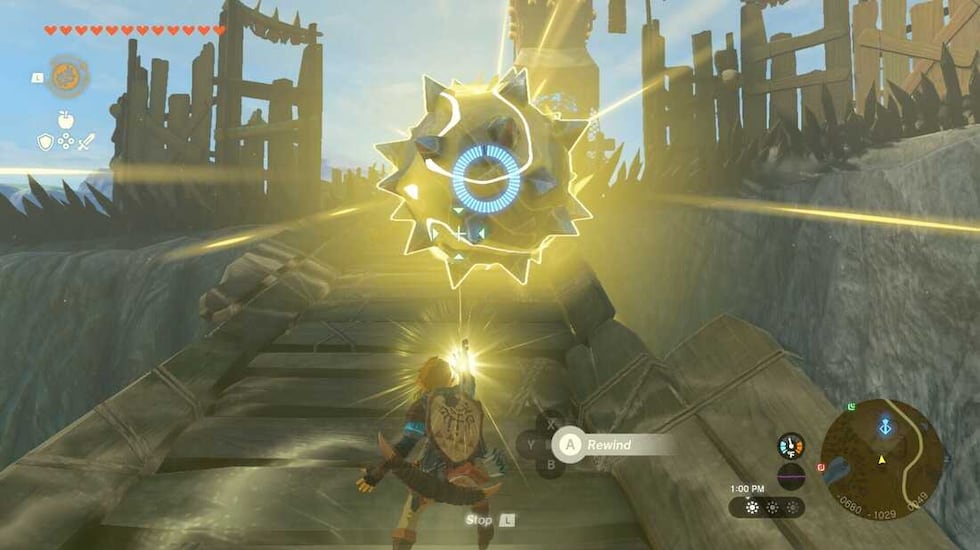
Tears of the Kingdom’s greatest strengths lie in Link’s newfound powers and the creative interactions between them. Gone are the Sheikah Slate and its associated abilities. They are replaced by the powerful arm granted to Link during the introductory sequence. Ascend lets Link rise upwards and pass through most solid objects directly above him. Recall allows him to move an object to its previous positions over a period of time. Link is free to move and manipulate other objects after activating this ability. Recall has many applications in both exploration and combat, giving him the ability to raise objects that have fallen or send projectiles back at enemies. Fuse allows Link to attach nearly any item or object to an arrow, weapon, or shield. Elemental arrows no longer exist in Tears of the Kingdom but their effects can now be achieved by attaching items like shock fruit to regular arrows. Link can also attach powerful new monster parts, items, or even other weapons to his existing weapons, increasing their functionality, attack power, and longevity. Shields work in much the same way. Link can attach a puffshroom to his shield that will create a cloud of spores after blocking an attack and limit an enemy’s ability to see. He can even attach a mine cart to his shield, improvising a full-on Tony Hawk Pro Skater experience. If it ever seems like something interesting can happen after using Fuse, a quick experiment will often validate that curiosity.
Link’s fourth ability, Ultrahand, is the crowning achievement and technical marvel of Tears of the Kingdom. Ultrahand allows him to move most objects and attach them together to build all sorts of new creations. The new Zonai devices add incredible amounts of complexity to this mechanic. With available stabilizers, gliders, rockets, fans, wheels, steering columns, and much more, players can cobble together almost anything they can imagine on the fly. Fashioning wheels and a steering column onto a stone slab will yield an all-terrain vehicle. Attaching a sail and a fan to a large piece of wood will craft a motorboat. Link can also create an aircraft by attaching rockets, fans, and a steering column to a glider. These creations require power to operate but there is no shortage of attachable batteries and Zonai charges available to Link. Basic vehicles just scratch the surface of Ultrahand’s value. Because of the game’s robust physics engine and the many ways to combine objects, Ultrahand starts to feel less like one of Link’s four abilities and more like an entire creative suite. Players could easily spend hours testing the limits of these systems and their own imaginations.
When Tears of the Kingdom is at its best, it provides so many minute to minute opportunities to combine Link’s powers and solve complex, open-ended problems. For example, Link can use Ultrahand to hold an object high above him, suspend it in that position with Recall, and then Ascend through it to reach higher ground. Each of Link’s abilities could be focal points of different games, but the interplay between all of them leads to many special moments of discovery and player liberty. Puzzles rarely have one intended solution, and by giving players the ability to tackle most problems with freedom of choice and ranging degrees of complexity, the game rarely limits them in any shape or form. Which is great since my go to solution of several logs glued together seemed to work most everywhere. With the addition of new constructs and powers come new ways to traverse Hyrule. Horses can still be tamed, registered at stables, and ridden across the landscape. Ultrahand will also allow players to travel by land, air, and sea in their created vehicles. However, the new addition of Skyview Towers makes navigating the kingdom simpler than ever before. Link must activate Skyview Towers to complete his map in what is perhaps the most unhinged mapping project in gaming and proof that OSHA compliance is optional here. These towers launch Link high into the sky and, after scanning the environment, leave him free-falling back to the surface. He can use the Skyview Towers to easily reach sky islands or employ his paraglider to land safely at points of interest. This feature makes exploring as easy as launching into the air, surveying the surrounding area, and diving down to anything that catches the player’s eye.
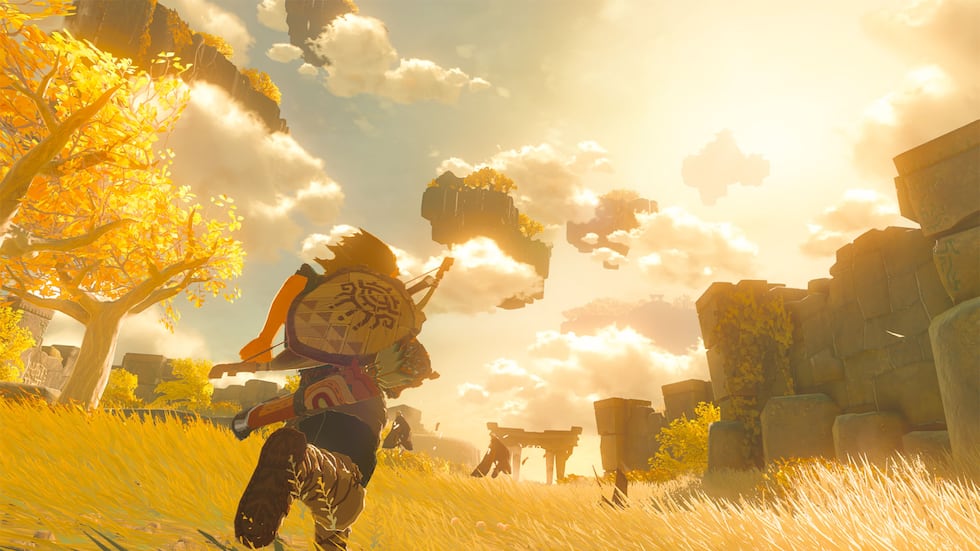
The number of notable activities, locations, and sidequests present in Tears of the Kingdom truly boggles the mind. There is always a tempting structure at the horizon’s edge or an awe-inspiring geographical feature. Always another rock that seems purposefully out of place. Always an environmental puzzle in an unmarked location that leads to something new. The feeling that there might just be something over that next hill never goes away, even after dozens of hours searching for treasure chests, armor, Koroks, caves, shrines, and wells. Finding every location on the map feels like its own challenge, and the game urges exploration by making discovery itself one of its foremost rewards.
_________________________________________________________________________________________________________________________________________________________________________
Tears of the Kingdom unfortunately displays a handful of performance and technical problems. The Switch often shows its age, with pop-in and frame rate dips leading to occasional moments of choppiness. Sometimes the game will freeze in the middle of action for a few seconds of loading, usually during large, real-time environmental transitions. Link’s Fuse ability frequently leads to the connection of multiple lengthy objects, and the more unruly weapons will often clip through the ground while equipped. From a gameplay perspective, the need to regularly access inventory quick menus can become cumbersome in higher intensity situations. Pausing several times during a hectic battle makes establishing a rhythm difficult and freezing combat again to select that encounter’s third weapon can spoil the tension. None of these issues subtract too much from the overall experience but they are notable and will creep up every now and then. With that said, and some personal gripes aside, it’s impressive that small inconveniences make up the vast majority of Tears of the Kingdom’s issues.
Nailing a sequel is no easy task, but Tears of the Kingdom surpasses Breath of the Wild in so many substantial ways, making it look like a blue print that becomes fully realized in this iteration. From the general streamlining and quality of life improvements to massive ability and world overhauls, every part of this game feels lovingly crafted and carefully considered. Plainly speaking, Tears of the Kingdom is perhaps the greatest intersection of player freedom and world design in a game. Its emphases on experimentation and creativity make every little detail crammed into this delightful experience worth uncovering. Despite its greatness in those areas, Tears of the Kingdom’s biggest strength is its constant rewarding of the player for simply being in its world. There is an effortless joy in discovery present here that few games can even hope to match. Anyone who owns a Switch owes it to themselves to play this game of the year contender and, if Breath of the Wild is the greatest entry in The Legend of Zelda series, Tears of the Kingdom will very soon claim its spot.
The Legend of Zelda: Tears of the Kingdom scores a 10.

Copyright 2023 KWTX. All rights reserved.